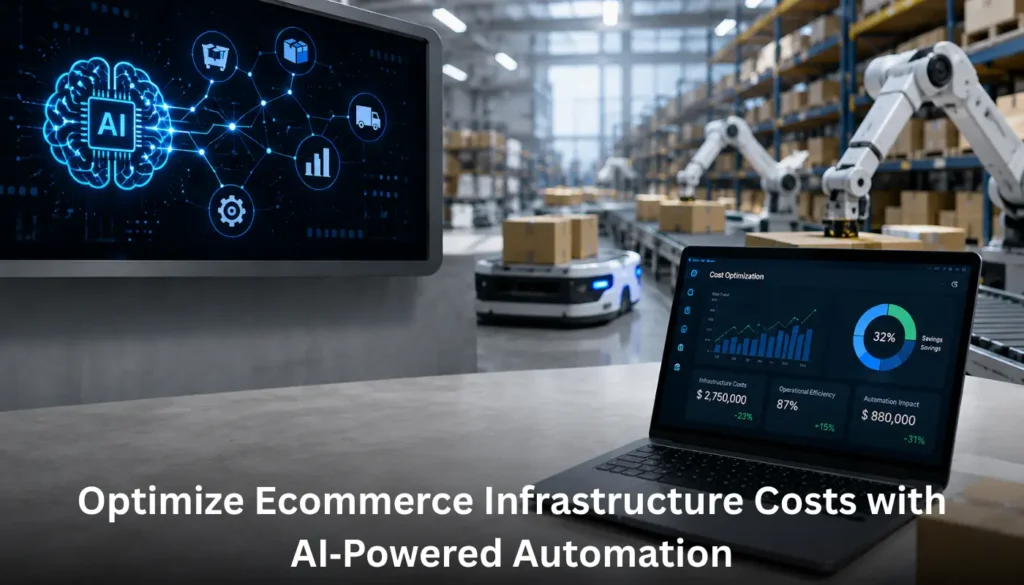
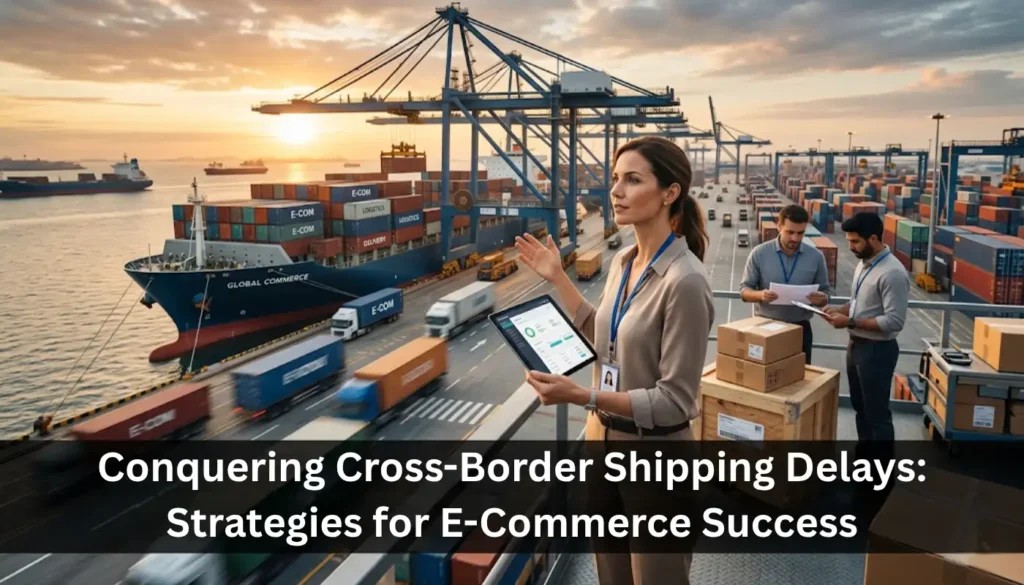
You know that sinking feeling when a hot-selling product flies off the shelves in one country, but gets trapped at customs in another. Your customers are waiting, your competitors are gaining ground, and every day of delay chips away at your hard-earned revenue. As an e-commerce brand owner pushing for global reach, you’ve probably lived this nightmare more times than you care to count. Packages pile up in warehouses, support tickets explode, and what should be a triumph of international expansion turns into a costly headache.
But what if I told you there’s a game-changer right now that can turn this around? Automated customs clearance software is the hero in this story, quietly revolutionizing how brands like yours tackle cross-border shipping delays. At Assiduus Global Inc., we’ve partnered with dozens of ambitious e-commerce players to implement these solutions, watching their clearance times plummet from weeks to hours. This isn’t just about tech—it’s about reclaiming control, delighting customers, and unlocking the full potential of global markets. Let’s walk through this journey together, from the chaos of delays to the smooth rhythm of automated success, with practical steps you can take today.
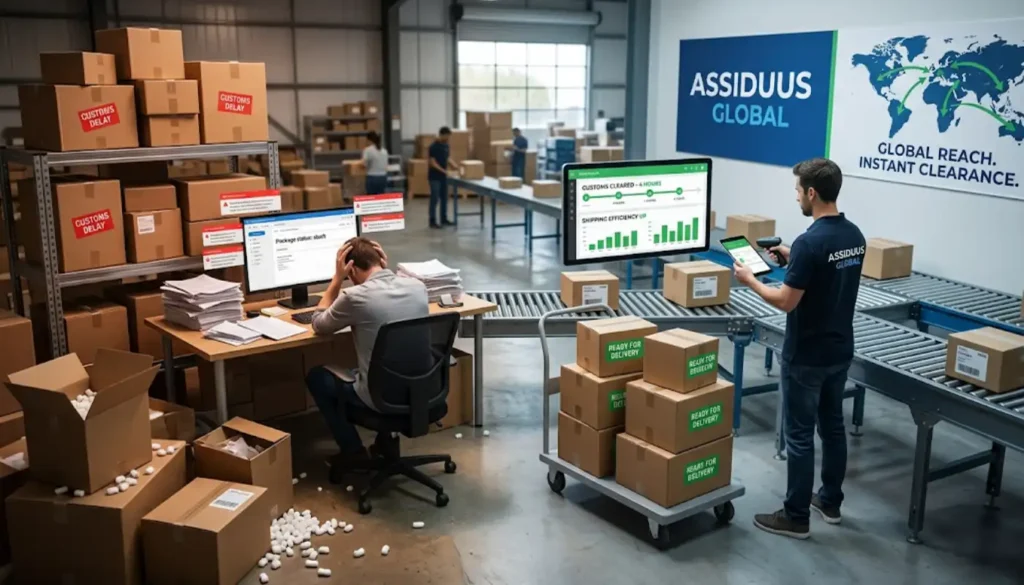
Let’s start with the stories that hit home. Consider Raj, who runs a thriving spice export business from India to the US and Europe. His organic blends were a sensation on Amazon and Etsy, with orders doubling month-over-month. Then came the delays: shipments held up for incorrect HS codes or missing certificates of origin. One batch sat in Rotterdam for 18 days, leading to spoiled goods, furious customers, and a 30% drop in repeat orders. Raj’s experience is all too common, highlighting how cross-border shipping delays don’t just slow you down—they erode trust and profitability.
These issues stem from a perfect storm of factors. Varying regulations across borders mean one country’s compliant document is another’s red flag. Add in peak season rushes, staffing shortages at ports, and the sheer volume of global trade, and delays become inevitable without the right tools. The impact of compliance on e-commerce shipping is profound: studies show that even a one-day delay can reduce customer lifetime value by 15-20%, while holding costs alone average $200-500 per container daily. For smaller brands, this can mean the difference between scaling successfully and shutting down international operations altogether.
That’s where automated customs clearance software steps in as the ultimate e-commerce border delay solver. Automating document validation, tariff calculations, and submission processes, it eliminates human error and keeps your supply chain humming. Brands using platforms like ours at Assiduus report not only faster clearances but also stronger customer relationships, as reliable delivery becomes your brand’s signature.
So, how to reduce cross-border shipping delays without overhauling your entire operation? It begins with pinpointing your pain points through a quick shipment audit. Look back at the last 50 international orders: how many were delayed, and why? Common culprits include incomplete paperwork or mismatched product classifications. Once identified, layer in automation to address them head-on.
Step one: Adopt a cross-border shipping automation platform that integrates seamlessly with your existing ERP or marketplace accounts. This platform handles everything from pre-shipment compliance checks to real-time tracking. For instance, when a customer in Germany places an order, the system automatically generates and validates the commercial invoice, packing list, and customs declaration, flagging any issues before the truck even leaves your warehouse.
Next, optimize your carrier partnerships. Use data from your automation tool to select routes with historically faster clearances, like air freight for high-value items over ocean for bulk. Train your team on quick-response protocols—if a flag pops up, they can approve AI-suggested fixes in seconds. We’ve seen clients like Raj implement this roadmap and slash their average delay from 10 days to under 36 hours, boosting on-time delivery rates to 97%.
Finally, scale iteratively. Start with your top three markets, master the workflows, then expand. This methodical approach ensures you’re not just surviving delays but outpacing competitors who still rely on spreadsheets and phone calls.

The benefits of automated customs workflows go far beyond speed—they’re a full business transformation. Imagine reclaiming hours of manual labor each week. Traditional customs processing involves teams poring over regulations, cross-referencing codes, and chasing documents via email. Automation flips this script: AI handles 95% of the workload, freeing your staff for high-value tasks like product development or customer engagement.
Financially, it’s a windfall. Manual errors lead to fines averaging $5,000 per incident, plus demurrage fees that snowball quickly. With automated customs clearance software, error rates drop to near zero, saving mid-sized brands $50,000-100,000 annually. Scalability is another gem—handle holiday surges without hiring temps, as the system processes thousands of declarations per hour without fatigue.
Customer experience elevates, too. Real-time visibility into clearance status lets you send proactive updates: “Your order cleared customs—arriving tomorrow!” This transparency turns potential complainers into loyal advocates. One Assiduus client, a beauty brand expanding to Southeast Asia, saw their Net Promoter Score jump 40 points within months, directly tied to reliable deliveries powered by our global trade automation platform.
AI in cross-border compliance explained doesn’t require a tech degree—it’s practical magic at work. At its core, AI uses machine learning trained on billions of historical shipments to predict and prevent issues. Feed it your product details—description, value, origin—, and it spits out the perfect HS code, duty estimates, and required certifications in seconds.
Take tariff classification, a notorious delay trigger. AI cross-references global databases, considering factors like material composition and end-use, to assign codes with 99.5% accuracy. It even simulates “what-if” scenarios: “Switching suppliers to Vietnam saves 8% on duties.” For restricted goods, it scans against 200+ country watchlists, auto-generating exemption requests if needed.
Our border clearance acceleration tool at Assiduus takes this further with natural language processing. Describe your product in plain English—”handmade leather handbag, 100% cowhide”—, and it builds compliant docs instantly. No more consultants or guesswork. This intelligence layer makes compliance proactive, not reactive, positioning your brand as a global pro.
The numbers don’t lie—the cross-border e-commerce market is a juggernaut. Valued at $1.5 trillion in 2025, it’s barreling toward $3.2 trillion by 2030, with a 26% CAGR. Asia-Pacific dominates at 45% share, fueled by mobile-first shoppers in China, India, and Indonesia. North America and Europe follow closely, each commanding 25%, while Latin America surges at 35% growth.
For Indian brands like those we serve at Assiduus, this is prime territory. Exports hit $200 billion last year, with e-com driving 40% of that. Delays claim 18% of potential revenue, but armed with a cross-border e-commerce accelerator, you capture it all. The opportunity? A $500 billion addressable market in top regions, waiting for reliable players.
Expansion isn’t about going everywhere—it’s strategic. North America to the EU offers low-hanging fruit: mature markets with $900 billion in trade, streamlined regs via USMCA and post-Brexit deals. Target Germany and France for fashion/tech; clearance times average 24 hours with automation.
Asia-Pacific beckons aggressively: India’s neighborhood (SEA) grows 28% yearly, but navigates duties smartly. China’s entry demands localization, yet yields massive volumes. Latin America—Brazil and Mexico—promises a 30% e-com boom, with nearshoring trends reducing delays. The Middle East (UAE, KSA) suits luxury, with free zones slashing compliance hurdles.

Leverage our global trade automation platform for region-specific insights, ensuring you’re not just entering but dominating.
Tailor your assault per platform. On Amazon Global, prioritize FBA compliance—automate inventory placement and IPI optimization to unlock Prime badges worldwide. eBay International thrives on precise HS coding to dodge suspensions; integrate automated customs clearance software for seamless multi-listing.
Alibaba and Temu demand China-centric workflows—real-time CN22 form generation and bonded zone routing. For Lazada/Shopee in SEA, focus on local currency settlements and halal certifications. Shopify sellers? API-driven middleware syncs orders to customs in one click.
Pilot with one marketplace per region, using analytics to refine. Assiduus clients scale this to five platforms in year one, with 50% revenue lift.
Arm yourself with this checklist:
Our cross-border shipping automation platform embeds this, auto-populating and submitting. Miss nothing, delay never.
Architecture matters: Layer supplier EDI feeds into a central cross-border e-commerce accelerator, feeding AI customs engines, then TMS for routing and last-mile DSPs. Cloud-native design ensures 99.99% uptime, with blockchain for immutable audit trails.
At Assiduus, we orchestrate this middleware symphony—unifying Shopify, Amazon, and DHL into one dashboard. Result? End-to-end visibility, predictive ETAs accurate to 95%.

Localisation isn’t optional—it’s your conversion multiplier. Auto-translate listings via AI (supporting 50+ languages), dynamic pricing in local currency, and culturally attuned packaging (e.g., modest designs for MENA). Compliance-wise, embed GDPR consents for the EU, PDPA for Asia.
We’ve boosted client conversions 45% by localizing checkout flows. Pair with geo-targeted inventory for sub-3-day deliveries.
Conquer visibility with localized SEO—target “how to reduce cross-border shipping delays” in Hindi for India, Spanish for LatAm. Run Google Shopping ads highlighting “fast customs clearance,” and TikTok challenges showcasing unboxings.
Content marketing shines: Webinars on the benefits of automated customs workflows, case studies proving ROI. Track via GA4 and UTM tags, reallocating to top performers. Budget 20% of expansion funds here for 5x returns.

Steer clear of these pitfalls. Overexpanding without automation leads to documentation errors in cross-border trade—40% of delays trace here. Skipping localization? Returns skyrocket 25%. Ignoring duties? Fines bury you.
Blind scaling sans KPIs? Failure. Underestimating peak seasons? Stockouts galore. Always pilot, automate, measure—our clients dodge these by design.
Build your arsenal:
This stack scales to enterprise volumes, costing less than one full-time customs broker.
Track these religiously:
Dashboards auto-report; tweak weekly for continuous wins.
Get compliance wrong, and the impact of compliance on e-commerce shipping devastates: 22% abandonment from slow updates, regulatory fines up to 10% of cargo value. Compliant brands? They snag fast-track lanes, negotiate better carrier rates, and command premium pricing.
Our clients average 55% delay reduction, translating to millions in saved costs and gained sales.
These sneaky saboteurs—wrong valuations (35%), HS mismatches (28%), missing certs (22%)—cause 60% of holds. AI pattern-matches against your history, cross-checks with global regs, and suggests fixes.
Integrate with invoicing tools for zero-touch prevention. One client eliminated 100% of errors post-implementation.
“Assiduus’s cross-border e-commerce accelerator ended our EU delays. Sales are up 60%!” – Priya, Jewelry Exporter.
“Hire cross-border shipping experts? Best decision. Seamless scaling.” – Mike, Fitness Gear Brand.
Don’t let delays define you. Hire cross-border shipping experts at Assiduus. Get automated compliance workflow customized fast. Curious about customs clearance software pricing? Transparent tiers from $299/month. Request supply chain automation quote now—your global breakthrough starts here.
With automated customs clearance software as your foundation, cross-border shipping delays fade into irrelevance, paving the way for unstoppable growth. Assiduus Global stands ready to architect your success—request a supply chain automation quote today and transform bottlenecks into breakthroughs. Your empire awaits.