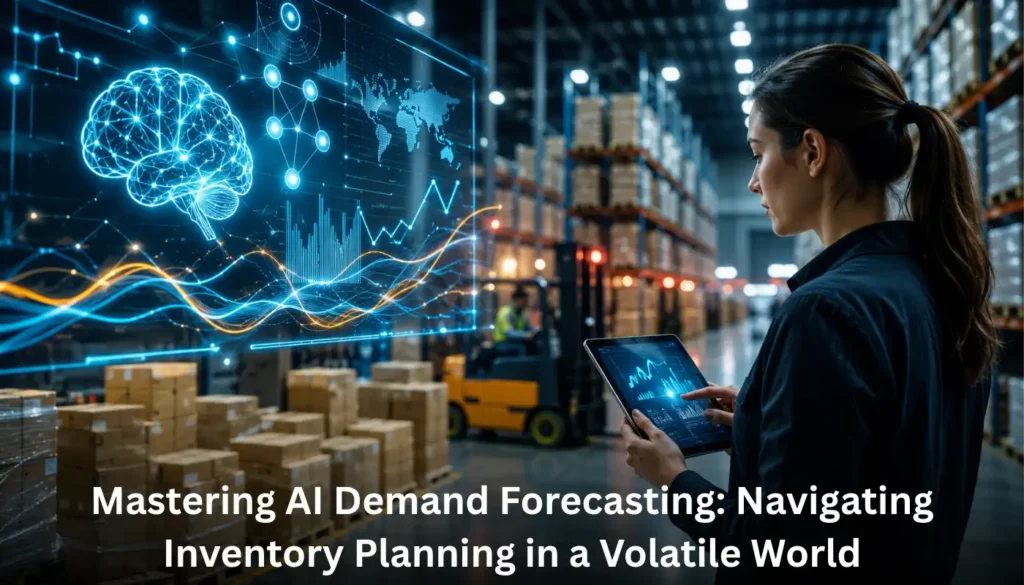
Growth is a double-edged sword for the modern e-commerce entrepreneur. One day, your storefront is a local success; the next, you are facing the daunting reality of international logistics, fluctuating consumer moods, and the relentless pressure of keeping products on virtual shelves. The shift from a domestic player to a global powerhouse requires more than just a great product—it requires a fundamental shift in how you perceive data. In a landscape where consumer trends change with a single viral video, traditional spreadsheets simply cannot keep pace. This is where the power of AI Demand Forecasting becomes the heartbeat of your operational strategy.
For brands looking to scale without the constant fear of overstocking or missing out on sales, the solution isn’t just more storage—it’s more intelligence. As a global e-commerce acceleration partner, we have seen firsthand how the right technology can transform a chaotic supply chain into a streamlined engine for revenue. By utilizing an AI inventory management software, you move from a reactive state to a proactive one, ensuring that your capital isn’t gathering dust in a warehouse but is instead fueling your next big expansion.
Stepping onto the global stage requires a clear-eyed look at the numbers. You cannot simply guess which market is “ready” for your brand. Market sizing is the process of stripping away the hype to look at the actual serviceability of a region. It involves analyzing not just the population, but the digital maturity and purchasing power of potential customers. When you understand the true scale of the opportunity, you can better allocate your resources and justify the costs of a cross-border e-commerce solutions provider.
The world is not a monolith, and your approach to inventory should reflect that. For instance, the benefits of machine learning in the supply chain allow you to differentiate between a high-volume, low-margin market and a premium niche market. Market sizing helps you determine where to place your “big bets” and where to test the waters with a leaner inventory model. Without this data, your AI Demand Forecasting models won’t have the necessary context to provide accurate predictions, leading to costly mistakes in the early stages of expansion.

Deciding where to take your brand next is perhaps the most critical decision an SEO executive or business owner will make. Every region carries its own set of “hidden” variables—from shipping reliability to seasonal cultural nuances.
The US and Canada offer a massive, tech-savvy consumer base. However, the expectations for delivery speed are at an all-time high. To succeed here, you need the best AI demand forecasting tools to manage distributed inventory across multiple coastal hubs. The competition is fierce, meaning a single stockout could send a loyal customer straight to a competitor.
The EU is a lucrative but fragmented market. While the population is large, the variations in VAT, language, and localized consumer laws make it a complex territory. A global marketplace management services team can help you navigate these waters, but your internal AI Demand Forecasting must be sharp enough to handle the nuances of multi-country logistics and diverse shipping lead times.
From the high-tech markets of Japan and South Korea to the explosive growth in Southeast Asia, this region is a mobile-commerce powerhouse. Expansion here requires a deep focus on a localisation strategy. It is not enough to translate your website; you must adapt your inventory to local festivals, shopping holidays like “Singles’ Day,” and preferred payment methods.
You don’t just “enter” a market; you enter a marketplace. Whether it’s Amazon, Mercado Libre, Zalando, or Rakuten, each platform has its own algorithm and fulfillment requirements. An E-commerce inventory optimization platform helps you synchronize these channels.
Your entry strategy should be tiered. Start with the “anchor” marketplace of a region to establish a baseline of data. Once your AI Demand Forecasting starts to show stable patterns, you can begin to diversify into secondary platforms or your own localized DTC site. This “hub and spoke” model prevents you from spreading your inventory too thin across too many channels at once. Many brands find that they need to outsource e-commerce operations during this phase to ensure that the technical integration between marketplaces doesn’t lead to data silos.
Nothing kills a global expansion faster than a surprise tax bill or a shipment stuck in customs. A compliance and taxes checklist is your best friend. You need to account for Import Duties, GST/VAT registrations, and product safety certifications. These factors directly impact your landing cost, which in turn affects your pricing strategy.
When you implement AI demand forecasting, you can actually build these lead times and cost variables into your replenishment cycles. If you know that customs in a particular country typically adds seven days to your lead time, the AI adjusts your “reorder point” accordingly. This prevents the “silent stockout”—where you have plenty of stock, but it’s sitting in a shipping container waiting for a rubber stamp.
Logistics is the backbone of your global brand. In a volatile world, relying on a single shipping lane is a recipe for disaster. A resilient cross-border logistics architecture utilizes a mix of air, sea, and land transport, often managed through an automated stockout prevention service.
The goal is to reduce the distance between your product and your customer. This often means using regional “dark stores” or 3PL (Third-Party Logistics) providers that integrate directly with your tech stack. When your logistics and your AI-driven supply chain solutions speak the same language, you gain the ability to reroute inventory in real-time. If a port strike occurs on the West Coast, your system should automatically trigger a fulfillment from an alternative hub to maintain your promise to the customer.
To truly connect with a global audience, your brand needs to feel “local.” This goes beyond changing currency symbols. A true localisation strategy involves adapting your product descriptions, imagery, and even your SKU (Stock Keeping Unit) sizes to fit regional preferences.
Inventory planning plays a role here too. Certain colors or styles may trend in London but fail in Tokyo. By using AI Demand Forecasting, you can identify these regional micro-trends early. This allows you to tailor your manufacturing and distribution to what people actually want, rather than what you think they want based on your home market’s performance.

Once the inventory is in place, you have to move it. Digital marketing in a new territory is a delicate balance of brand building and performance marketing. You are essentially introducing a stranger to a new community.
Your marketing spend should be tightly coupled with your inventory levels. There is no point in running a high-budget ad campaign for a product that is about to go out of stock. This is a common mistake to avoid. A global e-commerce acceleration partner ensures that your marketing team and your inventory team are looking at the same dashboard. When the AI Demand Forecasting predicts a surge in demand, your marketing team can ramp up the spend to capture it. Conversely, if stock is running low, they can pivot the budget to other SKUs.
Many brands fail at global scaling because they try to do too much, too fast. One of the biggest mistakes is ignoring how to manage inventory in a volatile market. They rely on “gut feeling” rather than data.
Other common pitfalls include:
To mitigate these risks, many savvy owners decide to hire AI e-commerce accelerator experts who have already navigated these pitfalls for dozens of other brands.
You cannot scale globally on a “freemium” budget. You need a robust tools and tech stack that supports multi-currency, multi-language, and multi-warehouse operations. This typically includes:
This stack acts as the “brain” of your operation. It allows you to professional inventory planning services that would be impossible to manage manually. The goal is to reach a state of “autonomous planning,” where the technology handles the repetitive tasks, allowing your human team to focus on high-level strategy.
Finally, how do you know if it’s working? Success in global e-commerce isn’t just about total sales. You need to look at:
When you implement AI demand forecasting, these metrics become much easier to track and improve. You start to see the impact of supply chain volatility on ROI and can take active steps to protect your margins.
The transition into a global leader is rarely a straight line. It is a journey defined by constant adaptation and the willingness to embrace new technologies. By making AI Demand Forecasting a core pillar of your business, you aren’t just buying a tool; you are investing in a future where your brand is resilient enough to withstand any market shift. The volatility of the world is not a threat to those who are prepared; it is an opportunity to outpace competitors who are still stuck in the past.
Success in 2026 and beyond belongs to the brands that can see the signal through the noise. Whether you are looking to outsource e-commerce operations entirely or simply want to implement AI demand forecasting within your existing team, the time to act is now. Don’t let your global potential be limited by manual processes.
1. What is the main benefit of AI Demand Forecasting? It allows brands to predict future sales trends with high accuracy, reducing both overstock and stockouts in unpredictable markets.
2. How does machine learning improve the supply chain? Machine learning analyzes vast sets of data—like weather, social trends, and historical sales—to find patterns that humans would miss, leading to smarter logistics.
3. What are “Global E-commerce Scaling Costs”? These include shipping, warehousing, customs duties, localized marketing, and the operational costs of managing multiple international marketplaces.
4. Why should I hire an AI e-commerce accelerator? An accelerator provides the technology and expertise to scale your brand quickly while avoiding the common logistics and compliance mistakes that sink new entries.
5. How do I protect my brand on global marketplaces? Use automated brand protection tools to monitor for counterfeiters and ensure consistent pricing and messaging across all regions.
6. What is “Middleware” in e-commerce? Middleware is software that connects your different systems (like Shopify, Amazon, and your warehouse) so they can share data in real-time.
7. How do I handle taxes when selling in Europe? You typically need to register for VAT in the countries where you store inventory and use a compliance tool to calculate and file your taxes correctly.
8. Is air freight better than sea freight for global scaling? Air freight is faster but more expensive; sea freight is slower but cheaper. A balanced strategy uses both depending on the urgency and value of the stock.
9. What is a “Stockout Prevention Service”? It is a managed service or software that monitors inventory levels and automatically triggers reorders or alerts to ensure you never run out of product.
10. How can I manage inventory across 5 different countries? The best way is through a centralized E-commerce inventory optimization platform that gives you a unified view of all stock levels globally.