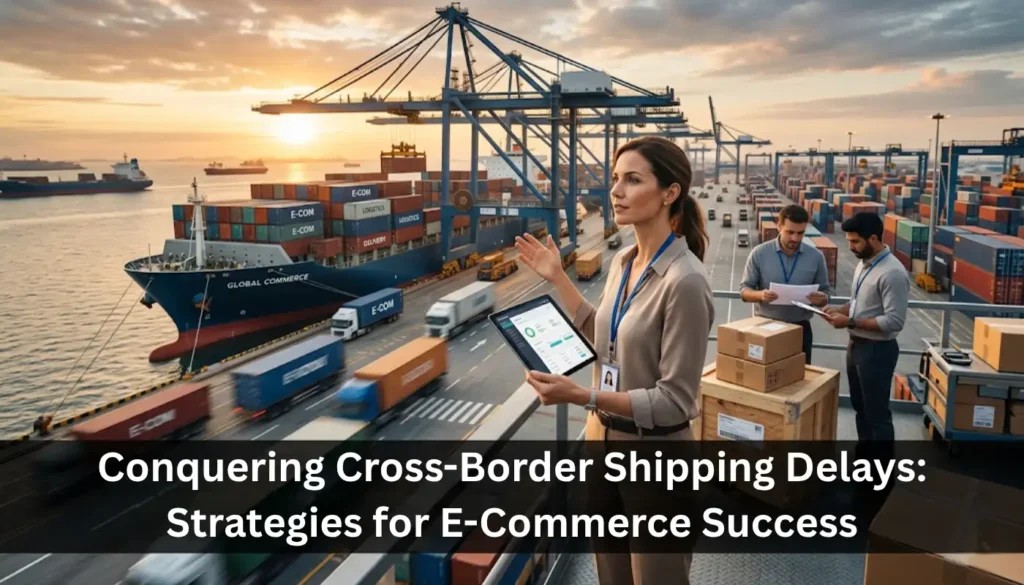

The world of retail has shifted from local storefronts to a sprawling, interconnected digital web. For an ambitious brand, the allure of global expansion is irresistible. You see the data, you see the hungry markets in Southeast Asia, Europe, and Latin America, and you realize that your next stage of growth isn’t in your backyard—it’s across the ocean. However, as you step onto the global stage, a shadow follows. It is the sophisticated, fast-moving, and relentless world of digital counterfeiting.
Expanding your footprint means increasing your surface area for attack. This isn’t just about someone selling a “knock-off” bag on a street corner anymore; it is about high-tech spoofing, unauthorized “grey market” diversions, and algorithm-driven listing hijacks. To survive and thrive, your strategy must be rooted in robust Cross-Border E-commerce Security. This isn’t just a technical barrier; it is the heartbeat of your global brand integrity.

When we talk about the impact of counterfeiting on brand reputation, we aren’t just talking about lost sales for the quarter. We are talking about the erosion of trust. Imagine a customer in Berlin ordering your premium product, only to receive a subpar imitation that breaks within a week. They don’t blame the anonymous third-party seller; they blame you. They leave a one-star review on a global marketplace, and suddenly, your “Global Brand Equity” takes a hit that costs millions to repair.
In 2026, the global counterfeit market is estimated to exceed $3 trillion. This “market sizing” is a wake-up call. If you are not actively investing in Cross-Border E-commerce Security, you are essentially leaving your warehouse doors unlocked in the middle of a digital crime wave.
The complexity of selling internationally introduces “The Scalability Gap.” In your home market, you might know every authorized distributor. But when you enter ten new countries via ten different marketplaces, tracking who is selling what becomes impossible for a human team. This is why brands are now searching for the best brand protection software for e-commerce.
What is brand equity in global e-commerce? It is the premium price a customer is willing to pay because they trust your name. Counterfeiters thrive by “bleeding” this equity. They ride on the back of your expensive marketing campaigns, steal your professional imagery, and undercut your price. This makes it impossible to maintain price integrity across global channels. If a customer sees your product for $100 on your official site but $30 on an unauthorized marketplace, your value proposition evaporates.
Effective Cross-Border E-commerce Security acts as a shield for this pricing power. By using AI-powered counterfeit detection tools, brands can now scan millions of data points across the web to find price anomalies and visual mismatches that signal a fake.

Scaling is not a “one size fits all” endeavor. A successful cross-border e-commerce security partner will tell you that the risks in the US are vastly different from the risks in India or Brazil.
Don’t launch everywhere at once. Start with an “Anchor Marketplace” (like Amazon Global) to establish your brand registry. Once your IP is recorded in their system, use top marketplace brand protection services to mirror that protection as you expand into niche regional platforms. This creates a unified “Global brand monitoring solution” that follows your product wherever it goes.
You cannot have security without a solid foundation. Many brands fail because they treat security as an afterthought to logistics. In reality, your cross-border logistics architecture is a primary target for “leakage.”

Before shipping your first box, ensure you have:
Your logistics should be “closed-loop.” Use track-and-trace technology to ensure that the product leaving your factory is the exact one arriving at the customer’s door. Any break in this chain is an opportunity for a “grey market” seller to swap your genuine goods for fakes. This is why a brand protection consultation for e-commerce often begins with a supply chain audit.
To beat the counterfeiters, you must look more “official” than they do. Localisation strategy isn’t just about translating words; it’s about translating trust. This includes local currency, local customer service, and local influencers.
When executing digital marketing for new markets, ensure your ads lead to “Verified” pages. Counterfeiters often run high-spend social media ads that look exactly like yours. By working with a brand protection implementation services provider, you can whitelist your official ad accounts and automatically report “spoofed” ads that use your trademarked keywords.
Success in Cross-Border E-commerce Security is measured by:
The biggest mistake brands make is relying on “Manual Monitoring.” In the time it takes an employee to find one fake listing, an AI bot can create fifty more. You must fight fire with fire.
To manage this, you need a full-stack e-commerce acceleration partner that provides:
If the complexity feels overwhelming, it may be time to hire a brand protection agency. These experts act as an extension of your team, handling the legal and technical heavy lifting so you can focus on growth.
The journey of international expansion is a marathon, not a sprint. While the threats are evolving, so are the solutions. By prioritizing Cross-Border E-commerce Security, you aren’t just playing defense; you are building a fortress that allows your brand to scale without fear.
Protecting your brand equity is an investment in your future. When you align with the right cross-border e-commerce security partners, you gain the freedom to explore new markets, knowing that your hard-earned reputation is being guarded by the best technology available.

The digital landscape is shifting, but your commitment to quality must remain a constant. The transition to global markets is the most significant step your business will ever take. Don’t let that step be tripped up by invisible threats. By embracing advanced technology and strategic partnerships, you ensure that your brand remains a symbol of excellence, regardless of the border it crosses.