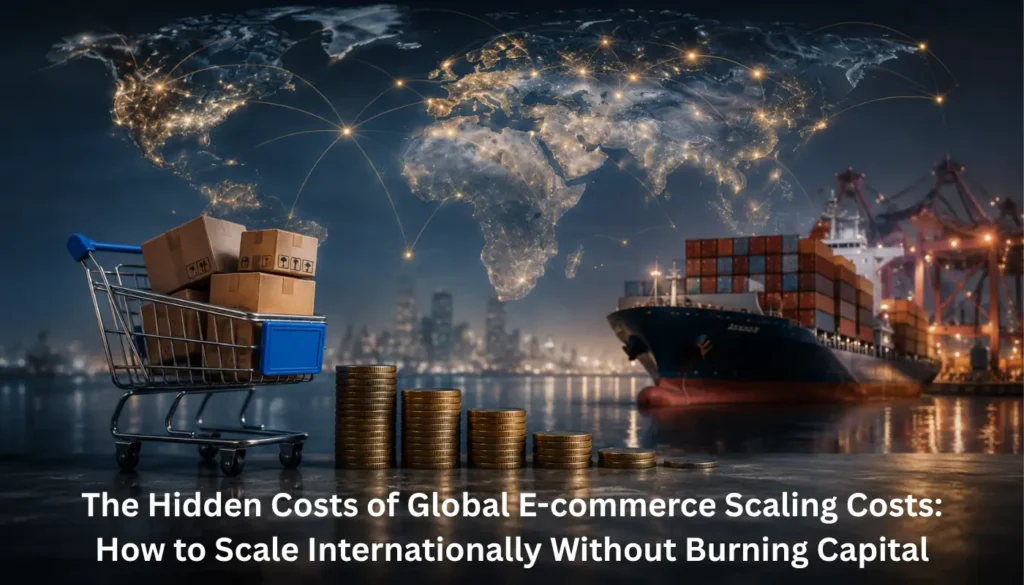
Standing at the edge of a massive ocean, a brand looks toward a horizon filled with untapped customers, booming markets, and the promise of a global empire. For many D2C founders, the allure of international expansion is intoxicating once they have conquered their home market and the world begins calling. However, as they set sail, they quickly realize the water is much deeper—and the currents much stronger—than they appeared from the shore. The dream of “going global” often hits a cold, hard reality: the invisible drain on the bank account.
Most brands enter the international arena with a simple math equation: Product Cost + Shipping = Profit. Unfortunately, that equation is missing about a dozen variables. When we talk about Global E-commerce Scaling Costs, we aren’t just talking about a higher courier bill. We are talking about the friction of moving atoms across borders, the complexity of local regulations, and the silent erosion of margins caused by inefficient systems. To survive, you need more than just a website; you need the Best e-commerce acceleration platforms to act as your navigator.
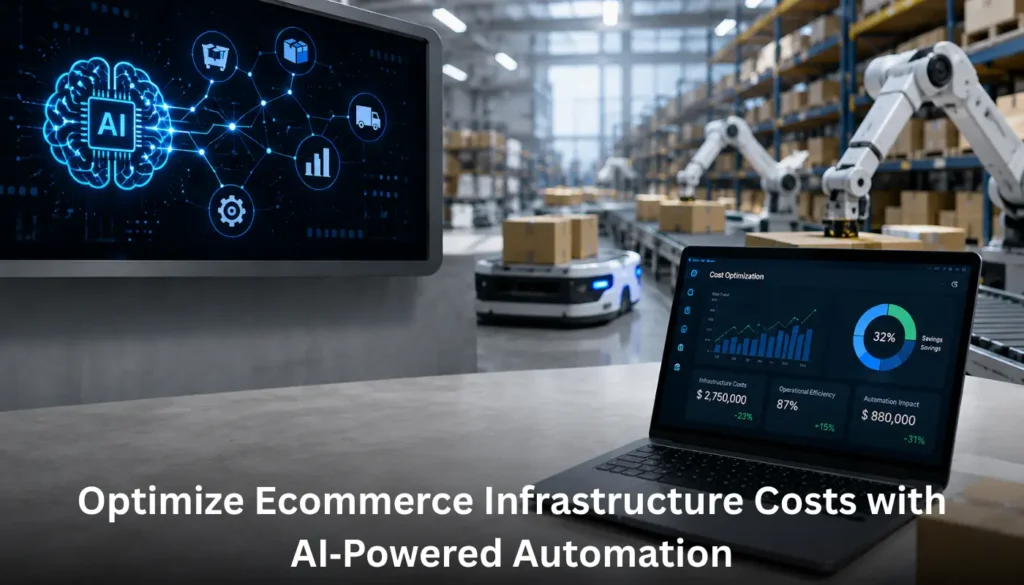
Scaling a brand today requires a shift from “spending your way in” to “automating your way up.” If you try to solve global problems with manual labor, you will find that Global E-commerce Scaling Costs will scale faster than your revenue. This is why brands are now looking to Buy cross-border e-commerce software that doesn’t just track orders but predicts hurdles before they happen. It’s about moving from a reactive mindset to a proactive, AI-driven architecture.
What are the hidden costs of international e-commerce? It starts with the “Landed Cost” surprise. You ship a product to a customer in Germany, and suddenly, there’s a VAT bill and a customs handling fee that neither you nor the customer expected. The customer is angry, the product is stuck, and your profit is gone. This is a classic example of how Global E-commerce Scaling Costs can spiral out of control without proper middleware to calculate these variables in real-time.
Then there is the issue of brand protection. What is the impact of brand protection on global sales? In the global wild west, unauthorized resellers can hijack your listings, undercut your prices, and ruin your brand equity in a matter of days. Without AI-powered marketplace management tools, you are playing a game of whack-a-mole with bad actors, wasting precious hours and capital that should be spent on growth. This is why savvy founders choose to Hire e-commerce acceleration company partners who specialize in keeping the brand ecosystem clean.
Before you commit a single dollar, you must understand the size of the prize. Market sizing isn’t just about total population; it’s about “Digital Readiness.” In 2026, we look at the intersection of high mobile penetration and established logistics corridors. The Global E-commerce Scaling Costs associated with a market that has poor local infrastructure are significantly higher than those with “last-mile” maturity. You are looking for markets where the consumer appetite outweighs the operational friction.
By leveraging Top cross-border e-commerce solutions, you can analyze search volume, competitive density, and average order value (AOV) across different territories. This data-driven approach ensures that you aren’t just throwing darts at a map. You are targeting regions where your product-market fit is high and your Global E-commerce Scaling Costs are manageable.
Expansion is not a one-size-fits-all journey. Each region comes with its own set of What are the risks of cross-border e-commerce logistics?
When you look at the regional breakdown, you see that the Global E-commerce Scaling Costs change based on local consumer behavior. In some regions, the cost is in the marketing; in others, it’s in the physical movement of goods. To navigate this, many brands contact international e-commerce specialists who have already built the “boots on the ground” infrastructure in these specific zones.
How to scale a D2C brand globally without high capital? The secret lies in “Hybrid Localization.” You don’t need a warehouse in every country. You need a centralized AI hub that directs traffic to the most cost-effective fulfillment nodes. This minimizes the Global E-commerce Scaling Costs by reducing unnecessary inventory holding and long-haul shipping fees.
Gone are the days when you could just list on Amazon US and call it a day. Today, you must be where the customer is. But every marketplace is a different beast. Amazon, Mercado Libre, Lazada, and Zalando all have different algorithms, listing requirements, and advertising structures. If you try to manage these manually, your Global E-commerce Scaling Costs will skyrocket due to human error and missed opportunities.
This is where AI-powered marketplace management tools become your best friend. They allow you to “list once, sell everywhere” by automatically translating and localizing content, adjusting prices for local currencies, and syncing inventory across all platforms. This automation is the only way to keep Global E-commerce Scaling Costs low while maintaining a massive global footprint. For those who want a turnkey solution, the move is often to Hire cross-border supply chain experts who can manage the entire marketplace lifecycle.
Nothing burns capital faster than a legal dispute or a frozen bank account. Your compliance checklist should include:
Managing this is a core part of reducing Global E-commerce Scaling Costs. One compliance error can lead to a 20% fine on your total turnover. To avoid this, successful brands buy cross-border e-commerce software that has compliance checks built into the checkout and shipping process.
How does AI help in cross-border supply chain optimization? It works by looking at the “Multi-Node” problem. Should you ship from a central hub in Singapore or a local warehouse in Thailand? AI analyzes shipping rates, delivery times, and duty costs in real-time to make that decision for you. This is the definition of Automated global supply chain software.
How to reduce international shipping costs for e-commerce? By utilizing “Zone Skipping” and consolidated shipping. Instead of sending 1,000 individual packages, you send one large pallet to a local hub, which then breaks it down for local delivery. This drastically cuts down on the “per-unit” Global E-commerce Scaling Costs, allowing you to offer competitive shipping rates to your customers.
In the end, logistics is the heartbeat of your global business. If the heartbeat is erratic, the business dies. By choosing to hire cross-border supply chain experts, you aren’t just paying for a service; you are buying peace of mind. You are ensuring that your Global E-commerce Scaling Costs are predictable and that your customers are getting their products on time, every time.
Scaling internationally is a marathon, not a sprint. The brands that win in 2026 are not the ones with the most capital, but the ones with the best intelligence. They understand that Global E-commerce Scaling Costs are a hurdle that can be cleared with the right technology and partners. They don’t just “go global”; they “grow global” with precision and poise.
If you are ready to take the leap, don’t go it alone. Contact international e-commerce specialists who can help you build the middleware that unifies your growth. The world is waiting, and with the right strategy, you can conquer it without burning your capital.