
Ever stepped into the wild world of cross-border selling and felt like you’re juggling flaming torches while walking a tightrope? That’s the daily grind for e-commerce brands chasing global growth. You’ve nailed your product, built buzz on home turf, but now global price fluctuations and sneaky taxes turn your profit margins into a guessing game. Suddenly, price pressure hits hard – customers balk at checkout, competitors undercut you, and you’re left wondering where it all went wrong.
The real kicker? Shipping isn’t just boxes on boats anymore. It’s a beast tangled with duties, VAT, compliance hurdles, and how to calculate shipping costs accurately to stay ahead in e-commerce. At Assiduus Global Inc., we’ve powered Fortune 500 brands through this maze with our AI-driven middleware. Our Brand Central™ dashboard turns chaos into clarity, letting you launch on 25+ marketplaces across 20+ countries without breaking a sweat. Today, we’re pulling back the curtain on how to calculate shipping costs for e-commerce – the ultimate guide that goes beyond customs to tackle taxes, compliance, and smart scaling.

Cross-border e-commerce is exploding. The global market hit $1.5 trillion in 2025, projected to double by 2030, driven by marketplaces like Amazon, Shopify, and AliExpress. But here’s the rub: 68% of sellers cite price pressure from unpredictable shipping and taxes as their top barrier to expansion. North America leads with stable demand, but Asia-Pacific (think India, Southeast Asia) grows fastest at 25% CAGR, thanks to rising middle classes. Europe offers premium pricing but demands strict VAT compliance.
How to calculate shipping costs ecommerce isn’t optional – it’s survival. Miss it, and your international pricing process crumbles under duties that can eat 20-30% of your global price. We’ve seen brands lose 15% revenue to “surprise” fees. Enter Assiduus: our cross-border acceleration streamlines logistics, giving you real-time insights to set competitive global prices without the guesswork.
Take our clients – a jewelry brand expanded to the EU via our marketplace-by-marketplace entry strategy. They dodged price pressure by automating taxes upfront, boosting conversions 40%. Whether targeting the US for high-volume sales or the UAE for luxury margins, knowing how to calculate shipping charges for e-commerce variations keeps you agile.
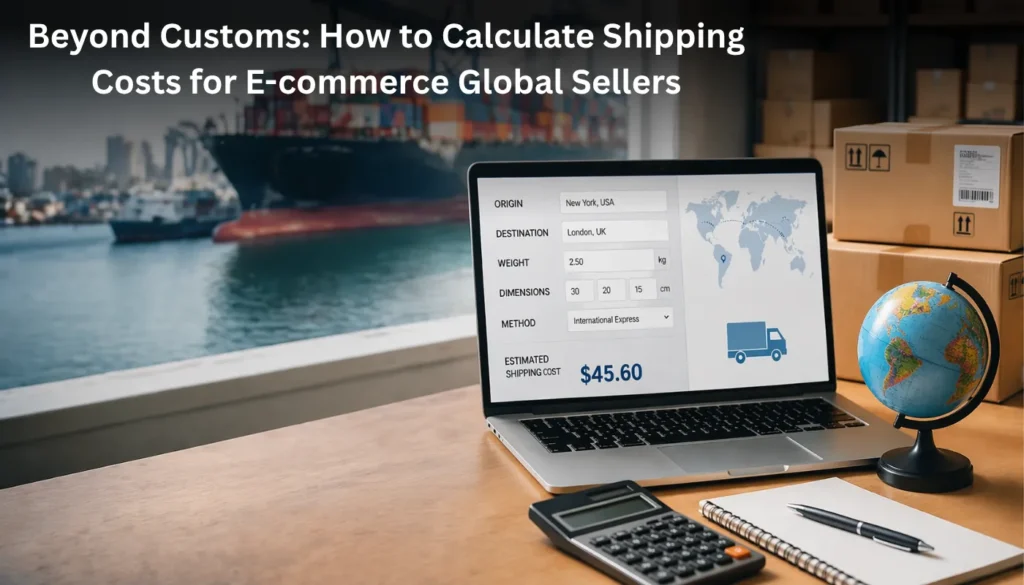
Let’s break it down like we’re chatting over coffee. How to calculate shipping costs boils down to four pillars: base freight, surcharges, duties/taxes, and hidden fees. Start with carrier rates from FedEx, DHL, or UPS – tools like ShipStation pull real-time quotes. Add fuel surcharges (15-20% lately) and residential delivery bumps.
But how to calculate shipping costs ecommerce gets tricky internationally. Factor in inconvenience: FOB keeps costs low for you, but DDP shifts the burden to buyers, easing price pressure. Use HS codes for accurate duty rates – a sneaker might face 10% US tariff vs. 5% EU. Tools like Flexport or our AI-backed demand forecasting crunch these in seconds.
For variations in how to calculate shipping charges for e-commerce, segment by zone: Zone 1 (domestic) might be $5-10/box, Zone 5 (Asia-Europe) jumps to $50+. Weight, dimensions, and velocity matter – slow movers kill cash flow. Pro tip: Batch fulfillment via 3PLs like our partners cuts global price impact by 25%.
Our international pricing process clients swear by this: Simulate landed costs (global price at buyer door) pre-launch. A $50 product ships to Germany at $15 freight + €12 VAT + €3 duty = $80 final. Tweak packaging to shave $2, and you’ve neutralized price pressure.

Let’s break it down like we’re chatting over coffee. How to calculate shipping costs boils down to four pillars: base freight, surcharges, duties/taxes, and hidden fees. Start with carrier rates from FedEx, DHL, or UPS – tools like ShipStation pull real-time quotes. Add fuel surcharges (15-20% lately) and residential delivery bumps.
But how to calculate shipping costs ecommerce must embed these. Use calculators like Avalara or our international sales tax automation tool to automate. For instance, UK post-Brexit VAT on imports under £135 now mandates IOSS registration. Ignore it, and inventory tax risks international pile up with seized goods.
Marketplace-by-marketplace: Amazon handles VAT collection in 10+ countries – leverage it. eBay? You’re on your own for calculations. Shopify plugins bridge gaps, but for scale, tap a global marketplace tax consultant. We’ve optimized chains for chocolate e-tailers hitting India, slashing global price hikes by 18% via treaty benefits.
Cross-border logistics architecture demands localization, too. Local warehouses (e.g., Amazon FBA in target regions) slash shipping times from 14 to 3 days, dodging price pressure. Pair with currency conversion – dynamic pricing tools adjust global prices in real-time, boosting AOV 12%.
Supply chain tax optimization tips turn headaches into wins. First, zone fulfillment: Store in low-tax hubs like Singapore (0% GST on exports). Use FTZs to defer duties – hold goods 18 months penalty-free.
Bonded logistics cut global price inflation. A gym software client’s supply chain? Optimized via our services, reducing tax leakage 22%. Avoid inventory tax risks internationally by forecasting demand – overstock in high-VAT spots like Brazil (17%) kills profits.
Digital marketing for new markets amplifies this. Target “affordable luxury” searches in India with localized ads. Mistakes to avoid: Ignoring transfer pricing (arm’s length rules), skipping local entity setup, or uniform pricing across markets. Localize: Price in INR for India, AED for UAE.
Our supply chain tax optimization service handles it – real-time dashboards flag risks, predict global price shifts.

Regulatory changes cross-border e-commerce move fast. 2026 brings CBAM carbon taxes in the EU (up to €100/ton), US Uyghur Forced Labor bans, and India’s stricter GST e-invoicing. India’s BEPS 2.0 eyes digital taxes on foreign sellers.
Adapt your international pricing process: Build buffers for 5-10% hikes. Use import export tax advisory firm expertise – we’ve guided salon software brands through these.
Where to expand? Breakdown: North America (40% market, low compliance), Europe (30%, high regs), APAC (25%, explosive growth), LATAM (5%, high potential).

Build like Lego: Core – carrier APIs for how to calculate shipping costs for e-commerce. Mid-layer – WMS for inventory. Top – our Brand Central™ for analytics.
Localisation strategy: Translate listings, adjust global prices for PPP (India 40% lower than the US). Digital marketing: SEO for “cross-border shipping calculator,” retarget high-intent carts.
Mistakes to avoid: Flat rates (ignore price pressure), no insurance (3% claims rate), poor packaging (returns spike 20%).
Ready to scale? Our global marketplace tax consultant, cross-border withholding tax service, and import export tax advisory firm integrate seamlessly. Protect brands, optimize chains, reclaim revenue.
Jewelry exporters cut global price gaps 30%. Chocolate e-coms launched in 15 markets penalty-free.
FAQs