
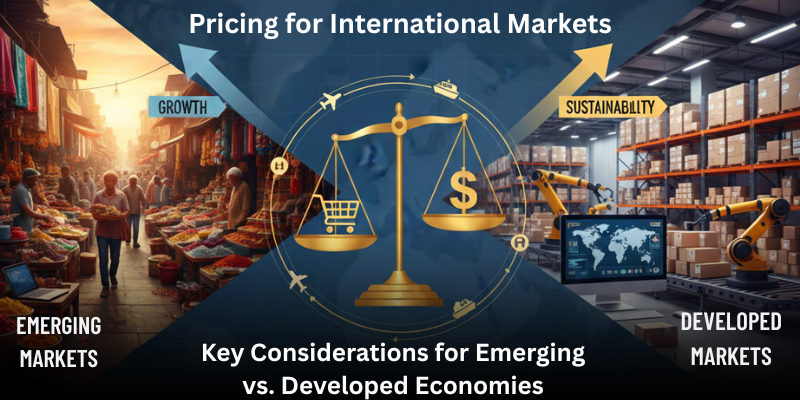
Setting the right price for products across diverse international markets is more than just a number game. It requires a strategic approach that balances economics, consumer behavior, supply chain dynamics, and competitive pressures. For brands aiming to scale globally, understanding the nuances of pricing for international markets—especially the contrasts between emerging and developed economies—is critical for growth and sustainability.
The modern consumer landscape is fractured by vast economic disparities, logistical challenges, and cultural differences. Brands expanding beyond borders face the complex task of creating international pricing strategies that resonate locally yet maintain global brand value. Global pricing isn’t one-size-fits-all; it’s a dynamic practice shaped by market conditions, regulatory frameworks, and consumer expectations.
In parallel, the rise of e-commerce amplifies the need to calculate shipping costs ecommerce precisely, as logistics costs directly influence final price points and customer satisfaction. Managing these intertwined factors well is key to navigating fierce price pressure in competitive markets everywhere.

Emerging markets tend to be more price sensitive due to lower average income and purchasing power. Here, consumers prioritize affordability, value, and access. Brands need to tailor their pricing by emphasizing cost-effective packaging, local partnerships, and flexible payment options.
Developed economies, however, often allow for premium pricing models. Customers are willing to pay more for brand prestige, quality, and innovation. The challenge lies in sustaining consistent global pricing without alienating these markets through perceived overpricing or underdelivering.
Emerging economies frequently experience greater economic instability and currency volatility. Effective international pricing must factor in these risks, including hedging or dynamic adjustments to maintain margin integrity.
Developed economies offer more stability but also face issues like inflation and regulatory changes influencing price adaptations. Here, technologies that enable real-time price monitoring and adjustments can be game changers.

Tailoring prices by analyzing local competitors, consumer behavior, and cost structures helps brands avoid the pitfalls of rigid pricing. This localization approach mitigates price pressure by balancing affordability and value perception across geographies.
Leveraging AI and machine learning allows brands to respond instantly to fluctuating demand, competitor moves, and supply chain disruptions. For e-commerce platforms, this includes the capacity to calculate shipping costs ecommerce dynamically, passing appropriate costs transparently to customers without losing competitiveness.
Optimizing distribution routes and managing inventory near demand hubs reduce logistics expenses, helping brands maintain healthier margins without shocking international consumers with steep prices. This operational efficiency, paired with strategic pricing for international markets, enhances resilience against external shocks.
Today’s successful brands rely on sophisticated pricing software that unifies cross-border data streams, market intelligence, and customer insights. These tools empower decision-makers to calibrate global pricing parameters while accounting for regional nuances, allowing for proactive adjustments rather than reactive fixes.
Additionally, AI supports pricing transparency and consistency across channels, strengthening trust with consumers and reducing the risk of unauthorized discounting or price pressure erosion.

International pricing must also consider tariffs, taxes, and trade regulations that vary widely between emerging and developed markets. Integrating compliance checks into pricing strategies prevents costly errors and supports smoother marketplace launches.
Facing price pressure is inevitable when competing internationally. Successful brands proactively reinforce their pricing power with data-backed strategies, avoiding discount wars that erode margins over time. Emphasizing quality, innovation, and customer experience while communicating clear value propositions can reduce sensitivity to price reductions.
Exploring global pricing through a strategic and technology-enabled lens is key to unlocking sustainable growth across borders. By focusing on nuanced differences between emerging and developed markets and embracing innovative tools, brands can confidently navigate the complex web of pricing for international markets. Take the next step in empowering your brand’s international journey by optimizing your pricing strategy and streamlining your supply chain today.