A resilient supply chain for Fast-Moving Consumer Goods (FMCG) plays a crucial role in fulfilling the growing consumer demands worldwide. The capacity to operate smoothly despite challenges such as fluctuating demand, geopolitical issues, and rapid technological changes defines a robust global e-commerce supply chain. This discussion takes a closer look at five essential pillars that underpin a durable, efficient, and adaptable supply chain model designed specifically for the FMCG industry.
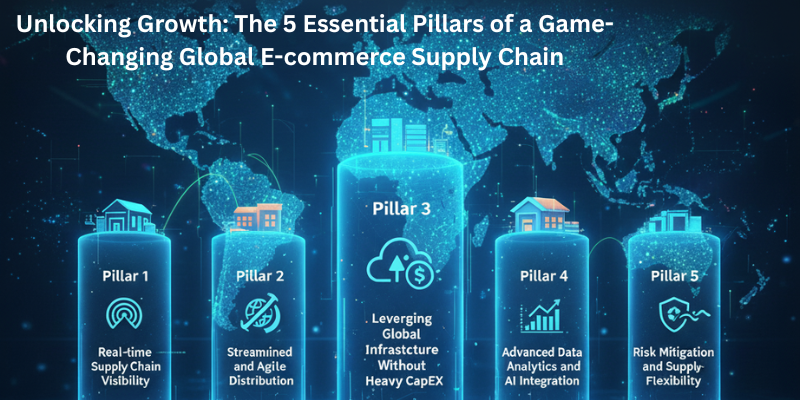
One of the fundamental pillars of a resilient global e-commerce supply chain is achieving real-time visibility. This means having up-to-the-minute insights into inventory levels, shipment status, and delivery performances across every link in the chain. For FMCG brands, where speed and availability drive customer satisfaction, this transparency empowers smarter decision-making and rapid response to disruptions.
Real-time monitoring tools, such as IoT sensors and RFID tags, enable seamless tracking from suppliers through warehouses to the end consumer. Moreover, advanced analytics platforms consolidate data streams, highlighting bottlenecks or delays before they escalate. This not only optimizes resource allocation but also elevates customer trust by providing accurate delivery updates.

Efficient and flexible distribution networks form the second pillar of a strong global e-commerce supply chain. Fast-moving consumer goods require swift replenishment cycles to keep shelves stocked — whether virtual or physical. Streamlining distribution means optimizing routes, leveraging automation in warehouses, and adapting quickly to fluctuating demand patterns.
Agility in distribution also involves embracing omnichannel strategies, which integrate online orders with brick-and-mortar fulfillment centers or dark stores. This approach shortens delivery times and reduces operational costs. Additionally, collaboration with reliable logistics partners and use of smart transportation management systems ensures that products reach customers promptly without unnecessary delays or damage.
Expanding global reach without investing heavily in infrastructure is a decisive advantage for FMCG companies focused on growth. Leveraging existing global supply chain infrastructure—such as third-party logistics providers, cloud-based supply chain platforms, and marketplace fulfillment services—allows brands to scale rapidly and economically.
This middleware approach unifies disparate operations, integrating channels, inventory systems, and actionable intelligence into a cohesive ecosystem. It enables supply chain elasticity where capacity can be adjusted per market requirements without long-term commitments to fixed assets. As a result, businesses reduce risk while maintaining high service levels across international borders.

Data-driven insights fuel the fourth pillar: enhanced decision-making through advanced analytics and artificial intelligence (AI). FMCG supply chains generate massive volumes of data, from consumer purchasing trends to supplier performance metrics. AI-powered tools analyze this data to predict demand surges, identify cost-saving opportunities, and proactively manage risks.
Machine learning models help refine inventory forecasting, ensuring popular items are available while minimizing overstock. AI also optimizes pricing strategies based on market dynamics, competitor behavior, and consumption patterns. This technology integration creates responsive and adaptive supply chains, an imperative in the e-commerce era where consumer expectations shift rapidly.
Finally, the ability to absorb shocks and quickly recover is critical in maintaining supply chain resilience. The FMCG sector faces varied risks such as geopolitical tensions, transportation disruptions, raw material shortages, or sudden spikes in demand. Flexible sourcing strategies, including diversification of suppliers and nearshoring, mitigate dependency on singular geographies.
Additionally, incorporating contingency plans and scenario modeling enhances preparedness. Utilizing digital collaboration platforms improves communication and coordination across stakeholders during crises. Building in redundancy—not as extra cost but as strategic insurance—ensures continuous product availability and customer satisfaction even under adverse conditions.
Crafting a global e-commerce supply chain that embodies these five pillars is essential for FMCG brands to thrive in an increasingly complex and competitive market. By prioritizing real-time visibility, employing streamlined distribution, and leveraging global infrastructure without heavy CapEx, companies gain the agility and strength needed for sustainable growth. Coupled with AI-driven insights and robust risk management, this approach ensures brands remain resilient and responsive.

Unlock the potential of your FMCG supply chain today by embracing these strategies. Reach out to experts who can help you harness technology and global networks to build a future-proof supply chain.
If you want assistance tailoring these insights into actionable strategies for your brand, let’s connect and accelerate your growth in global e-commerce.